 你优品
你优品SHEVEU is a professional scalp care brand in Australia for over 70 years (originally Selsun Australia version), backed by the pharmaceutical giant Sanofi. It focuses on pharmaceutical-grade efficacy-based shampoo and conditioner, distinguishing itself from ordinary daily chemical shampoos. Its core features are concentrated in four aspects: ingredients, formula, segmentation, and experience.
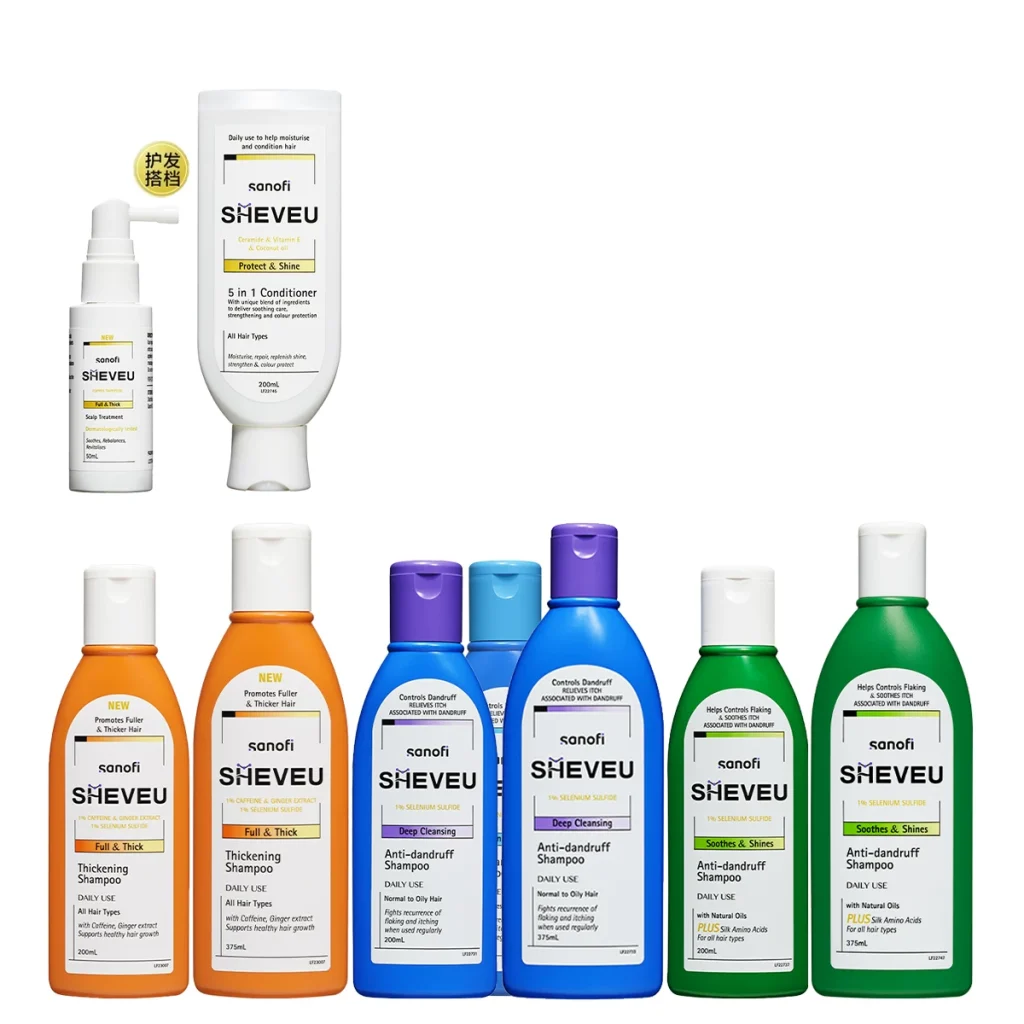
Core effective ingredient: 1% selenium disulfide with gold concentration. The full series comes standard with 1% selenium disulfide, which is clinically recognized as a core ingredient for inhibiting Malassezia, addressing dandruff, greasy hair, itchy scalp, and seborrheic dermatitis. It precisely targets recurrent dandruff, greasy and flat hair, red and acne-prone scalp, and improves scalp microbiota imbalance from the root. Different from low-concentration anti-dandruff products on the market, it has direct and rapid efficacy, making it the core competitive advantage of the product.
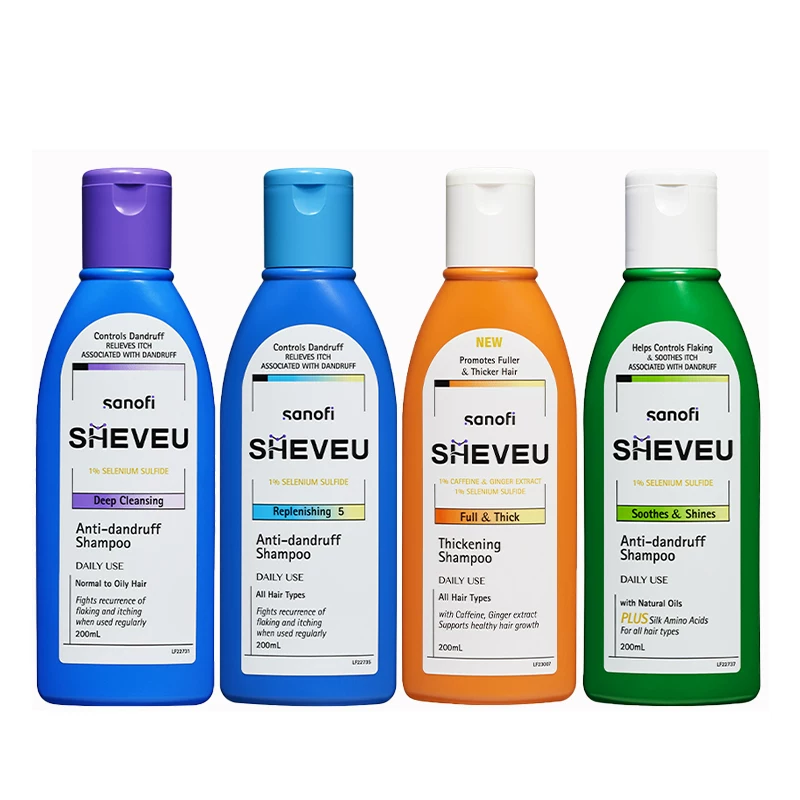
Precise color separation and care, covering all hair types with 4 colors. The bottle precisely matches different scalp problems, fine-grained positioning of needs, reducing user selection costs:
Purple bottle: Powerful oil control and anti-dandruff, suitable for people with oily hair, excessive dandruff, and seborrheic scalp;
Orange bottle: Contains 1% caffeine, controls oil + strengthens hair roots, primarily targets soft, limp hair, prevents hair loss, and creates volume;
Green bottle: Mint + Moroccan oil, gentle and soothing, suitable for sensitive scalp, damaged by heat and dyeing;
Blue Bottle: Niacinamide + Panthenol, moisturizing and anti-dandruff, suitable for dry and sensitive hair, as well as hair that is oily at the top and dry at the ends.
Formula Advantages: 0% silicone oil + a comprehensive line of silicone-free formulas with combined efficacy, preventing silicone oil from clogging hair follicles and exacerbating oil production; formulated with caffeine, niacinamide, vitamin B5. and plant essential oils, achieving a four-in-one effect of anti-dandruff, oil control, repair, and volume enhancement, balancing efficacy and gentleness, suitable for sensitive scalps and the entire family; specially blended with woody, freesia, and mint fragrances, mitigating the slight sulfur odor of selenium disulfide and enhancing the pleasure of washing and care.
Brand endorsement + Australian local quality and production, adhering to Australia’s stringent beauty and skincare safety standards, backed by a pharmaceutical company background, with verifiable efficacy and high safety, distinguishing itself from affordable internet-famous products, and boasting strong professional attributes.
II. International market environment (industry environment)
(I) Global general trend of skin care and hair care
The boom of functionalization and scalp care: The global hair care market has shifted from basic cleaning to scalp health management. Products with functions such as anti-dandruff, oil control, anti-hair loss, and soothing effects have grown much faster than ordinary hair care products. Consumers refuse ineffective hair care and prefer products with clinically proven ingredients and clear functions.
Improved recognition of imported skincare products: Imported skincare products from Europe, America, Australia, Japan, and South Korea have seen a continuous increase in penetration rates in both global and Chinese markets, thanks to their professional ingredients, strict quality control, and established brands. Australian skincare products, in particular, emphasize naturalness, purity, and pharmaceutical-grade quality, offering significant differentiated advantages.
Health awareness drives the rise of the ingredient-focused faction: Consumers prioritize ingredient safety, shun irritating preservatives and inferior surfactants, and favor products free of silicone oil, alcohol, and high-activity ingredients. Ingredients such as selenium disulfide, salicylic acid, and caffeine have become market hotspots.
(II) Australian domestic market environment
The Australian hair care market will reach AUD 1.61 billion in 2025. with an annual growth rate of 2.51%. Its core characteristics are:
In Australia, where the climate is hot and dry, there is a large population suffering from greasy hair, dandruff, and seborrheic dermatitis. Therefore, functional shampoo and conditioner are in rigid demand;
Local consumers advocate natural, sustainable, and pure beauty makeup, and prefer professional skincare products with a pharmaceutical background and simple yet effective ingredients. Saiyi aligns with local consumer preferences;
Local supermarkets (Coles, Woolworths) are the mainstream distribution channels, and Saiyi has been a long-term resident in these mainstream supermarkets, serving as a national-level anti-dandruff skincare brand in Australia.
(III) Cross-border market environment in China
Release of dividends in the cross-border skincare and haircare sector: Australian imported skincare and haircare products have seen explosive growth on Tiktok, Xiaohongshu, and Pinduoduo’s cross-border channels, with users showing high trust in the “Australian natural, pharmaceutical-grade” label;
Competitive landscape: Domestic ordinary anti-dandruff shampoos (such as Head & Shoulders) primarily focus on mild daily-use products. There are few competitors in the medical-grade selenium disulfide hair care category, with Saiyi occupying a niche market in this blue ocean segment;
Favorable policies: With the improvement of cross-border e-commerce policies and the maturity of the genuine product supply chain, the import threshold for purchasing through purchasing agents and live streaming has been lowered, and the price has dropped from the original purchasing agent’s hundred-yuan level to a fair price, significantly enhancing the cost-effectiveness.
III. Target audience habits (user personas and lifestyle habits)
Stratification of core target population
Core target audience: People aged 18-40 with oily scalp or dandruff, including students, urban workers, people with fine, soft, and flat hair, and patients with seborrheic dermatitis. Both men and women are covered. Men have a more direct demand for oil control and dandruff removal, while women focus on achieving a fluffy and high-crowned hair style and hair quality repair.
Secondary target group: people with sensitive scalp, damaged scalp due to perming and dyeing, mothers who share products with their family, family users, people with red and itchy scalp, people who have been perming and dyeing for a long time, those who pursue gentle repair, and those suitable for use by the whole family.
Niche audience: Those with hair loss anxiety, experiencing fine, soft, and limp hair, postpartum hair loss, or hair loss due to staying up late, can choose the orange-bottled caffeine variant, which balances oil control and strengthens hair roots.
Lifestyle habits of the population
Scalp problems have become normalized: long-term staying up late, high sugar and high oil diet, high stress, and environmental pollution have led to common issues such as greasy hair, dandruff, itchy scalp, flat and limp hair, and acne on the scalp; the summer heat exacerbates oiliness, and the peak demand season is concentrated from May to September.
The pain points of hair care are clear: ordinary shampoo is ineffective in controlling oil and removing dandruff, resulting in recurrent dandruff; oil-controlling shampoo makes hair dry, while repairing shampoo makes it greasy; fine, soft, and flat hair is difficult to fluff up; sensitive scalp is easily irritated, and ordinary hair care products cannot solve the root problem.
Fast-paced life: Working people and students pursue efficient hair care, hoping to achieve long-lasting oil control after shampooing and reduce the frequency of washing hair, adapting to the fast-paced life.
Improvement in ingredient awareness: Young people actively research skincare ingredients, recognize professional ingredients such as selenium disulfide and caffeine, and refuse to pay for products with low value for money.
IV. Consumption Habits (Purchasing Decision-making, Channels, Behavioral Preferences)
1. Purchase decision logic: efficacy priority > brand > price > appearance value
The core decision-making point for users is whether the product can address issues such as greasy hair, dandruff, and flat scalp. They prioritize clear and effective ingredients (such as selenium disulfide). Secondly, they trust products imported from Australia and endorsed by pharmaceutical companies. They are moderately sensitive to price, and are willing to pay a premium when the efficacy meets their expectations. Live broadcast promotions and cross-border affordable products offer better value for money.
2. Channel preference: Online-oriented, with a surge in cross-border e-commerce and social e-commerce
Core channels: Tiktok live streaming, Xiaohongshu, Pinduoduo cross-border, Taobao Tmall Global; users learn about products through short video reviews, bloggers’ recommendations, and genuine user word-of-mouth, trusting UGC for authentic feedback;
Offline channels: high-end supermarkets and imported beauty and makeup boutiques, with a low proportion;
Traditional purchasing channels are gradually being replaced by official cross-border channels, with the assurance of genuine products becoming a core consideration.
3. Characteristics of consumer behavior
High repurchase rate: Efficacy-based hair care products rely on a usage cycle. After scalp issues are improved, maintenance is still required. Users have a strong willingness to repurchase, and it is common for them to stock up on multiple bottles or purchase family-sized packages;
Seasonal consumption differences: Summer sees vigorous oil secretion, leading to a surge in sales; winter focuses on repair and moisturizing, resulting in increased demand for blue and green bottles;
Strong social attributes: Users are prone to sharing the effects of “anti-dandruff and oil control, high crown” on social platforms, spontaneously promoting and generating word-of-mouth;
Refined selection: Users precisely choose the color of the bottle based on their scalp issues. For oily scalp, choose purple; for fine, soft, and flat scalp, choose orange; for sensitive scalp, choose green; for dry and sensitive scalp, choose blue. The trend of refined consumption is evident.
4. Price and promotion preference
The original overseas purchasing unit price was on the high side. Domestic cross-border channels, live broadcast promotions such as buy one get one free, and multi-bottle combo packs have become mainstream, with users preferring to stock up in combinations. Sales skyrocket during major promotional events (618. Double 11. and summer preheating in May).
With its Australian pharmaceutical-grade professional endorsement, 1% selenium disulfide core ingredient, and targeted precision care, Saiyi precisely enters the global functional shampoo and conditioner blue ocean market. It aligns with the current market trends of the rise of ingredient-focused consumers, the rigid demand for scalp care, and the increasing trust in imported shampoo and conditioner products. The target audience is primarily young people with specific scalp issues, who tend to shop online, prioritize efficacy, and have a high propensity for repeat purchases. Therefore, Saiyi possesses strong differentiated competitiveness in the domestic cross-border shampoo and conditioner market.
未经允许不得转载:你优品 » SHEVEU from Australia | Why does its pharmaceutical-grade anti-dandruff shampoo dominate the cross-border skincare and haircare market?